How to Rebuild Credit After Charge Offs and Restore Financial Stability?
Rebuilding your credit after charge offs may feel intimidating, but it is far from impossible. Many people experience charge offs due to job loss, medical emergencies, or unexpected financial strain. While these negative marks can impact your credit profile for years, they do not permanently block you from achieving financial stability.
With the right strategy, discipline, and knowledge, you can gradually rebuild your credit and regain lender confidence. At Hikaru Services, we believe that understanding your options is the first step toward long-term recovery. This guide explains how to rebuild credit after charge offs using proven, practical methods.
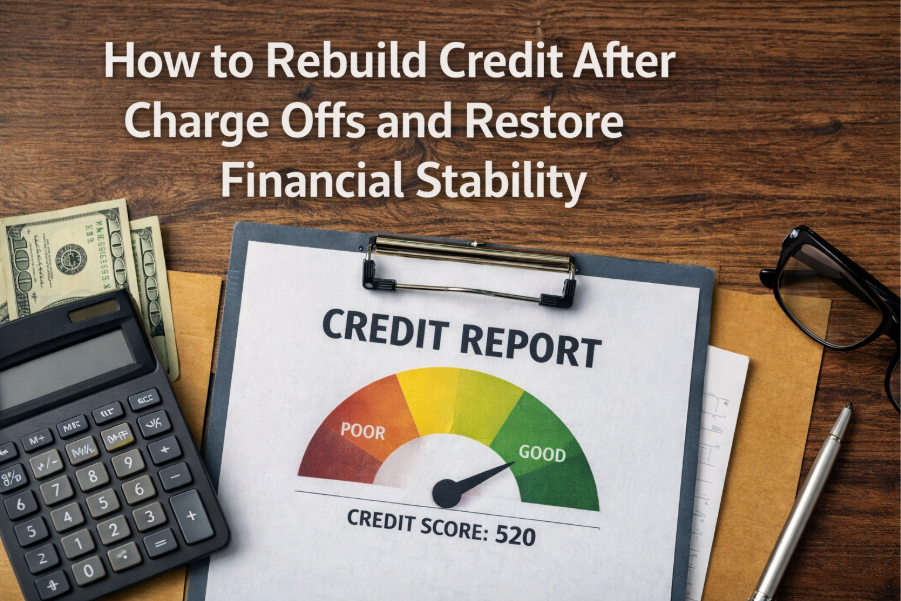
What Does a Charge Off Mean on Your Credit Report?
A charge off is one of the most serious negative entries that can appear on a credit report, and understanding it clearly is essential before starting the rebuilding process. When a lender charges off an account, it means they have decided the debt is unlikely to be collected after months of missed payments. However, the debt does not disappear, and the borrower is still legally responsible for repayment.
Charge offs often remain visible to lenders and can affect future borrowing decisions. Knowing how they work helps you respond effectively instead of feeling stuck or discouraged.
Key points to understand include:
Charge offs usually occur after 120 to 180 days of nonpayment
The account may still be sold to a collection agency
The balance remains legally owed
The mark can stay on your credit report for up to seven years
How Do Charge Offs Impact Your Credit Score?
Charge offs significantly damage your credit score because they indicate a failure to meet repayment obligations. Payment history is the most influential credit factor, and charge offs fall under severe delinquency. This makes them especially harmful when they first appear on your report.
The impact of a charge off can vary depending on your overall credit profile. Someone with a previously strong credit history may see a sharp drop, while someone with existing negative marks may experience a smaller decline. Over time, however, their influence fades if you maintain positive credit behavior.
Factors that affect the impact include:
Your score before the charge off occurred
The number of charge offs on your report
Whether the balance remains unpaid
Recent on-time payment activity
Is It Possible to Rebuild Credit After Charge Offs?
Yes, it is absolutely possible to rebuild credit after charge offs, even if you have multiple accounts affected. Credit scoring systems reward recent positive behavior, which means what you do after a charge off matters more than the mistake itself over time.
Rebuilding credit is a gradual process that requires patience and consistency. Lenders want to see responsible habits, steady income management, and reduced risk. As new positive data replaces older negative information, your credit profile becomes stronger.
Successful rebuilding usually involves:
Establishing consistent on-time payments
Reducing outstanding balances
Limiting new credit applications
Demonstrating financial stability
What Should Be Your First Step After a Charge Off?
Taking the right first steps after a charge off can prevent further damage and set a solid foundation for recovery. Many people feel overwhelmed and avoid checking their credit, but awareness is essential for progress.
Start by reviewing all three major credit reports carefully. Look for errors, outdated information, or accounts you do not recognize. Understanding your current standing allows you to prioritize debts and create a realistic recovery plan.
Important first actions include:
Pulling and reviewing your full credit reports
Verifying charge off dates and balances
Identifying which debts are still active
Creating a monthly budget you can sustain
Should You Pay or Settle Charged-Off Accounts?
Deciding whether to pay or settle a charged-off account depends on your financial situation, but resolving the debt is often better than ignoring it. While paying a charge off does not remove it from your credit report, it does update the status, which can improve lender perception.
Many creditors are willing to negotiate settlements for less than the full balance. This can make repayment more manageable while still demonstrating responsibility.
When considering repayment options, keep in mind:
Paid or settled charge offs look better than unpaid ones
Settlements can reduce total debt faster
Written agreements should always be requested
Avoid restarting delinquency timelines unnecessarily
How Does Payment History Help Rebuild Credit?
Payment history is the single most important factor in rebuilding credit after charge offs. Even one missed payment can slow your progress, while consistent on-time payments gradually rebuild trust.
Lenders and scoring models place heavy emphasis on recent activity. Showing that you can manage current obligations responsibly signals reduced risk and financial maturity.
To strengthen your payment history:
Pay all bills on or before the due date
Use automatic payments when possible
Focus on minimum payments first, then extra amounts
Avoid skipping payments during tight months
Can Credit Counseling Services Support Credit Recovery?
Many people benefit from professional guidance when rebuilding credit, especially if multiple debts are involved. Credit counseling services provide structured support and financial education to help individuals regain control.
These services focus on long-term improvement rather than quick fixes. Counselors help you understand your options, manage payments, and avoid common mistakes that lead to repeat delinquencies.
Credit counseling services often assist with:
Budget creation and expense tracking
Negotiating with creditors
Debt management planning
Financial education and accountability
How Does Credit Card Debt Counseling Help After Charge Offs?
Credit card debt is one of the most common causes of charge offs, which makes credit card debt counseling especially valuable. This type of counseling focuses on managing revolving credit responsibly and reducing high-interest balances.
Through structured plans and expert advice, individuals learn how to regain control over credit card usage and avoid falling back into delinquency.
Benefits of credit card debt counseling include:
Lower interest rates through negotiations
Simplified monthly payments
Education on responsible credit use
Reduced financial stress
Is Credit Counseling Online a Safe and Effective Option?
Credit counseling online has become increasingly popular due to its convenience and accessibility. For many people, online counseling offers the same benefits as in-person sessions without scheduling or travel challenges.
When choosing online counseling, it is important to select reputable providers that offer certified counselors and transparent programs.
Online counseling often provides:
Flexible scheduling and remote access
Educational tools and budgeting resources
Secure communication platforms
Ongoing progress tracking
Should You Open New Credit Accounts After Charge Offs?
Opening new credit accounts can help rebuild credit if done carefully and strategically. The goal is not to accumulate debt, but to demonstrate responsible usage and consistent payments. Certain credit products are designed specifically for rebuilding purposes and can help create positive payment history.
Common rebuilding options include:
Secured credit cards
Credit-builder loans
Low-limit starter cards
How Does Credit Utilization Affect Your Recovery?
Credit utilization measures how much of your available credit you are using and plays a major role in credit scoring. High utilization can signal financial strain, even if payments are on time. Keeping balances low shows lenders that you can manage credit without overreliance.
To improve utilization:
Keep balances below 30 percent of limits
Pay balances down before statement dates
Avoid maxing out cards
Spread usage across accounts if possible
How Long Does It Take to Rebuild Credit After Charge Offs?
The timeline for rebuilding credit varies, but meaningful improvement is possible within the first year of consistent effort. While charge offs remain on reports for years, their influence decreases as new positive data is added. Recovery depends on how quickly you establish strong payment habits and reduce debt.
General timelines include:
Initial improvement within 3–6 months
Stronger scores within 12–24 months
Long-term stability with ongoing discipline
What Mistakes Should You Avoid While Rebuilding Credit?
Avoiding common mistakes is just as important as taking positive actions. Many people slow their progress by repeating behaviors that caused financial trouble in the first place. Awareness and discipline are key to long-term success.
Mistakes to avoid include:
Missing new payments
Applying for too much credit
Ignoring existing balances
Closing old accounts unnecessarily
Why Is Budgeting Essential for Credit Recovery?
Budgeting provides structure and clarity during the rebuilding process. Without a realistic budget, it becomes easy to overspend or miss payments, which can undo progress. A strong budget supports financial stability and helps prevent future charge offs.
Budgeting helps you:
Track income and expenses
Allocate funds for debt repayment
Build emergency savings
Reduce reliance on credit
Why Should You Monitor Your Credit Regularly?
Monitoring your credit keeps you informed and motivated throughout the rebuilding process. It allows you to see improvements, identify errors, and adjust strategies as needed. Regular monitoring also protects against identity theft and reporting inaccuracies.
Benefits of monitoring include:
Tracking score changes
Catching reporting errors early
Measuring progress over time
Maintaining accountability
Conclusion: How Can You Move Forward After Charge Offs?
Understanding how to rebuild credit after charge offs empowers you to take control of your financial future. While the process requires patience and discipline, every positive action strengthens your credit profile and opens new opportunities.
At Hikaru Services, we are committed to helping individuals regain confidence and stability through informed financial decisions. If you need expert guidance or personalized support, contact us today and take the first step toward rebuilding your credit the right way.
Frequently Asked Questions
-
A charge off typically remains on your credit report for up to seven years from the original delinquency date. Its impact lessens over time as positive credit activity is added.
-
Paying a charge off may not immediately raise your score, but it improves your overall credit profile. Lenders often view paid charge offs more favorably than unpaid ones.
-
Yes, approval is possible, especially with recent on-time payments and low balances. Some lenders specialize in working with individuals rebuilding credit.
-
In most cases, settling is better than leaving it unpaid because it shows responsibility. It also reduces outstanding debt and potential collection activity.
-
No, charge offs do not permanently prevent borrowing. As time passes and positive credit behavior continues, lenders become more willing to approve applications.