Debt Consolidation vs. Debt Settlement: What’s the Difference?
Introduction
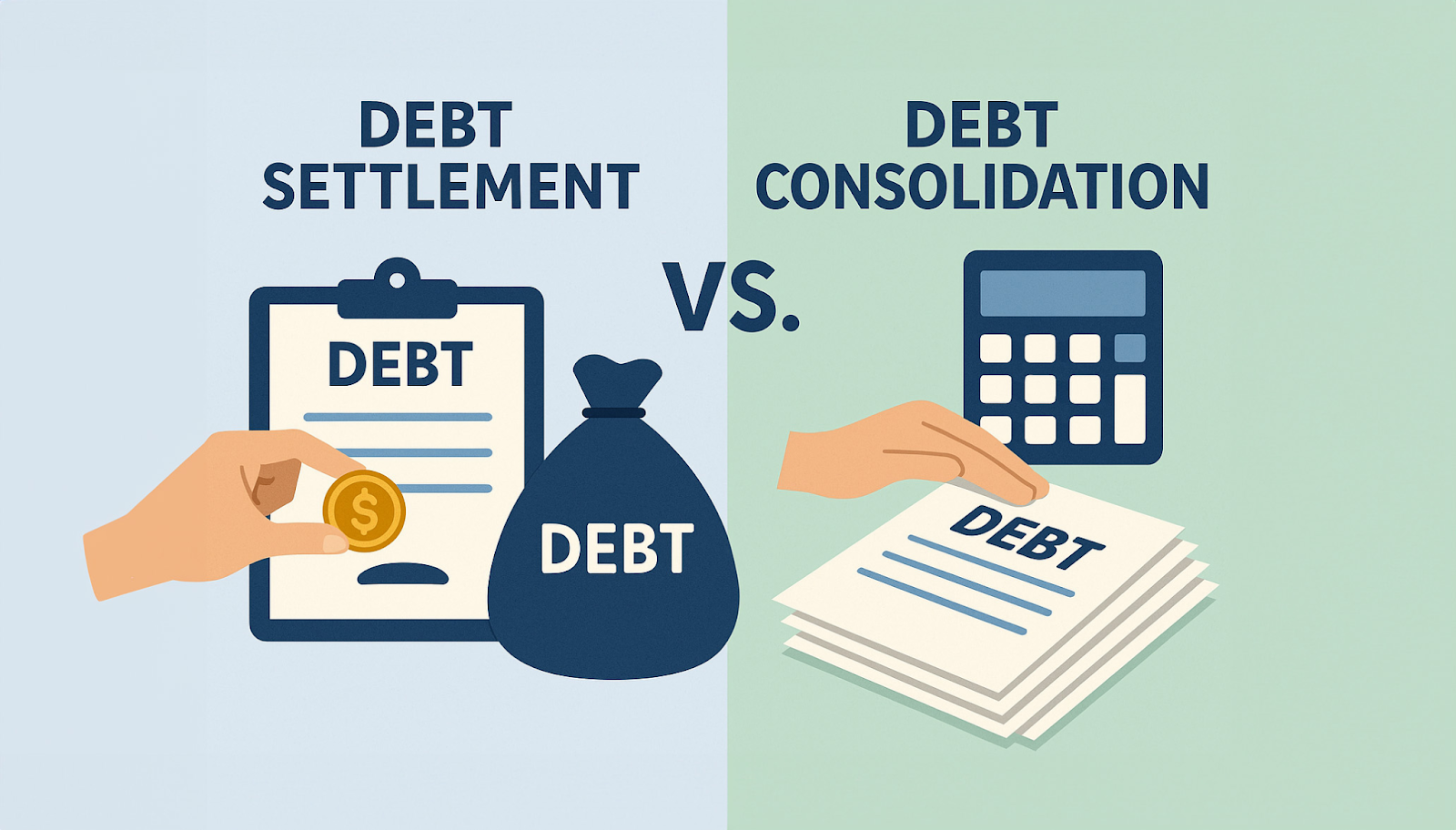
When you're buried in multiple debts, it's natural to feel overwhelmed and unsure about how to regain control of your finances. Two common options that come up in this situation are debt consolidation and debt settlement. While they may sound similar, they function in very different ways. At Hikaru Services, we believe in empowering individuals with clear information to make smart financial choices. In this guide, we’ll break down both options and help you determine which one might be right for you.
What Is Debt Consolidation?
Debt consolidation is the process of combining multiple debts—typically high-interest credit card balances or personal loans—into a single loan or credit account. This helps simplify monthly payments and may result in a lower overall interest rate, making it easier to manage your debt over time.
Rather than juggling several different payment due dates and interest rates, debt consolidation allows you to make one predictable monthly payment. It doesn’t reduce the total amount owed but restructures your debt in a more manageable way.
What Is Debt Settlement?
Debt settlement is a method where you or a third-party negotiates with creditors to accept less than the total amount owed. This usually happens when you're significantly behind on your payments and cannot afford to pay off your debt in full.
You typically stop making payments directly to your creditors and instead deposit funds into a special account. Once you’ve saved enough, your settlement company or legal advisor offers a lump sum to the creditor, hoping they will accept a partial repayment and consider the debt resolved.
How Does Debt Consolidation Work?
Debt consolidation can work in several ways, depending on the tools you choose:
Personal Loans: You take out a loan and use it to pay off your existing debts. Then, you repay the new loan in fixed monthly installments, ideally with a lower interest rate.
Balance Transfer Credit Cards: You transfer existing credit card balances onto a single card with a low or 0% introductory interest rate. This allows you to pay off the principal faster without accruing much new interest.
Home Equity Loans: If you own a home, you can borrow against the equity and use the funds to consolidate your debts. This option often has lower interest rates but comes with the risk of losing your home if you default.
The goal of consolidation is to simplify your financial life and potentially reduce the cost of your debt over time.
How Does Debt Settlement Work?
Debt settlement typically involves several key steps:
Stop Making Payments: You halt payments to your creditors, which may lead to collections or legal action.
Save in a Dedicated Account: You begin saving in an account managed by a debt settlement company.
Negotiation: Once enough funds are available, the settlement company negotiates with creditors to accept a portion of what you owe.
Settlement Payment: If the creditor agrees, the settlement is paid, and the rest of the debt is forgiven.
Debt settlement can be risky, as not all creditors are willing to negotiate. Additionally, your credit score may drop significantly due to missed payments and settled accounts being marked negatively.
What Are the Benefits of Debt Consolidation?
Debt consolidation can simplify your finances by combining multiple payments into one. It may also lower your interest rate, helping you save money over time. This approach can make debt more manageable and reduce the chances of missed payments.
Simplified Finances: One monthly payment makes managing debt easier.
Potential Interest Savings: If you qualify for a lower rate, you may pay less in interest over time.
Credit Score Stability: With consistent payments, consolidation may even improve your credit score.
Predictable Payments: Fixed repayment terms help with budgeting and financial planning.
What Are the Downsides of Debt Consolidation?
Debt consolidation doesn’t reduce the amount you owe—it simply restructures it. It often requires good credit to qualify for favorable terms. If you’re not careful, it can lead to accumulating even more debt over time.
No Reduction in Total Debt: You still owe the full amount, just in a new format.
Credit Requirement: Good credit is often needed to qualify for favorable loan terms.
Temptation to Spend: Without discipline, you might rack up new debt while paying off the consolidated loan.
Fees: Some loans come with origination fees, balance transfer fees, or prepayment penalties.
What Are the Benefits of Debt Settlement?
Debt settlement can be a useful option for those facing financial hardship and unable to repay their full balances. You may pay significantly less than you owe. It can offer a faster path to becoming debt-free compared to long-term repayment plans. Settlement can also serve as an alternative to bankruptcy and may reduce your monthly financial burden.
Debt Reduction: You may pay significantly less than you owe.
Faster Resolution: For some, it’s a quicker path to becoming debt-free compared to long-term repayment plans.
Alternative to Bankruptcy: Settlement can be a less severe option when bankruptcy is the only other choice.
Cash Flow Relief: Once debts are settled, your monthly expenses can decrease dramatically.
What Are the Risks of Debt Settlement?
Debt settlement can offer relief, but it's important to understand the potential downsides. Credit score damage is common due to missed payments and settled accounts.
Credit Score Damage: Missed payments and settled accounts can cause long-term credit harm.
No Guarantee: Creditors aren’t obligated to settle, and some may refuse.
Fees and Costs: Settlement companies often charge high fees, sometimes based on the original debt amount.
Tax Liability: Forgiven debt can be considered taxable income.
Collection Activity: During the process, creditors may continue to contact you or even take legal action.
How Do the Timeframes Compare?
Understanding how long each option takes can help you plan your financial recovery. Debt consolidation typically follows a structured repayment schedule, often lasting 3 to 5 years. Debt settlement, on the other hand, may resolve your debts faster—sometimes within 2 to 4 years—but comes with more uncertainty depending on negotiations.
Debt Consolidation: Typically follows a structured repayment period of 2 to 5 years. The length depends on the loan or credit program you choose.
Debt Settlement: Varies widely, often lasting between 2 to 4 years. It depends on how quickly you can save up funds and how long negotiations take.
How Does Each Option Affect Your Credit?
Your credit score can be significantly impacted depending on the method you choose. Debt consolidation may have a minimal negative effect initially but can help improve your score over time with consistent payments. Debt settlement, however, can cause more immediate and severe damage, as it often involves missed payments and negotiated reductions.
Debt Consolidation: If you make timely payments on your new loan, your credit may improve over time. However, applying for a new loan can cause a small, temporary dip in your score.
Debt Settlement: Settlement usually has a negative effect. Missed payments, collections, and partial repayment can all harm your score for years.
When Should You Consider Debt Consolidation?
Debt consolidation is a good option if:
You have a stable income and can afford monthly payments.
You have a decent credit score and qualify for low-interest loans.
You want to streamline your finances without hurting your credit.
You’re committed to not taking on new debt during the repayment process.
When Should You Consider Debt Settlement?
Debt settlement may be appropriate if:
You're overwhelmed and can’t afford to pay off your debts in full.
You've already missed payments and creditors are calling.
Bankruptcy is your only other option.
You're okay with a temporary credit score decline in exchange for relief.
Which Option Is More Suitable for Your Situation?
The right choice depends on your financial circumstances:
If you can afford monthly payments and want to protect or rebuild your credit, debt consolidation is usually the better route.
If you’re behind on payments, unable to catch up, and are looking for significant debt relief regardless of credit score, debt settlement might be more appropriate.
In either case, it's important to carefully weigh your options and consider the short- and long-term implications of each path.
What Are Some Alternatives to Debt Consolidation and Settlement?
If neither option feels like a perfect fit, consider the following:
Debt Management Plans (DMPs): Offered by nonprofit credit counseling agencies, these help you pay off debt with reduced interest, without taking out a new loan.
Credit Counseling: A certified counselor can help you understand your options and create a custom plan.
Bankruptcy: This should be a last resort, but it’s a legal option that can offer relief from overwhelming debt.
DIY Repayment Strategy: Some people successfully pay off debt using the snowball or avalanche methods, targeting one debt at a time.
Conclusion
Debt consolidation and debt settlement are both valid strategies for tackling debt, but they serve very different purposes and suit different financial profiles. At Hikaru Services, our goal is to help you make confident decisions that pave the way to long-term financial freedom. Whether you’re looking to streamline payments or negotiate for less, understanding the pros, cons, and mechanics of each option is essential. Choose the one that aligns with your needs, and don’t hesitate to seek expert help when needed.
Don’t let your questions go unanswered—get in touch with us today and let’s explore the best way forward for your unique situation.
FAQ
-
Debt consolidation combines multiple debts into a single loan—often with a lower interest rate—making repayment more manageable. In contrast, debt settlement involves negotiating with creditors to settle for less than the full amount owed.
-
Debt settlement typically applies to unsecured debts—such as credit card balances, medical bills, and payday loans—but not to secured debts like mortgages or auto loans.
-
Legitimate debt settlement firms usually charge fees only after a settlement is reached, typically around 15%–25% of the enrolled debt. Charging upfront fees is often a red flag and could violate FTC rules.
-
Debt consolidation generally follows a clear repayment timetable—usually spanning a few years, depending on the loan terms. Debt settlement can take anywhere from several months to a few years, depending on negotiation progress.
-
Debt consolidation can help improve your credit over time if you consistently make on-time payments. Debt settlement, however, usually has a negative impact—missed payments and settled accounts can stay on your credit report for up to seven years.
-
Yes. Debt settlement involves high risks, including credit damage, tax implications, possible collection action, and no guarantee creditors will agree to settle. It’s often considered a last resort.